
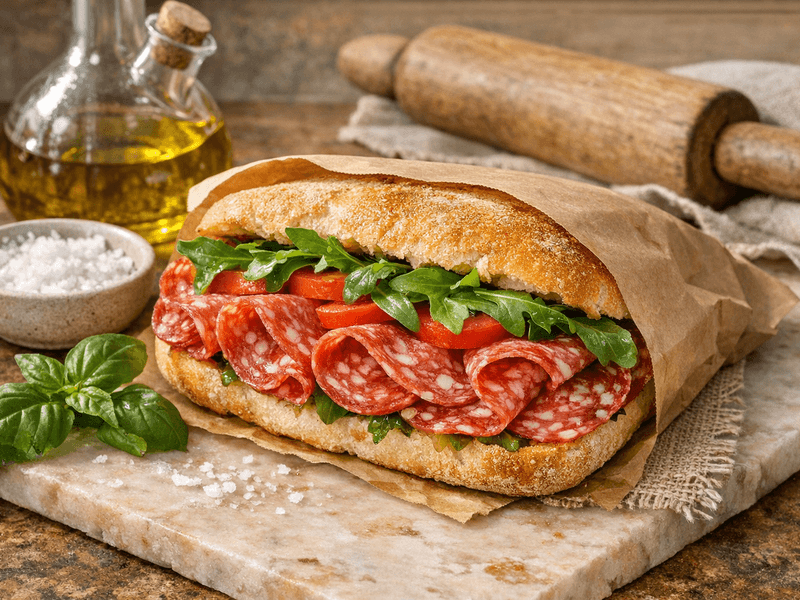
Salame Milano
Antipasti • Italia
Informazioni su Salame Milano
Finely ground Milanese salami
How to Make Salame Milano (Traditional & Healthy Version)
Salame Milano, a beloved cured meat from the Lombardy region of Italy, is a staple in Italian snack culture and antipasto platters. Its origins date back to the bustling city of Milan, where artisans perfected the craft of curing pork to create a delicately flavored salami with a fine, soft texture. Featuring a blend of lean pork and pork fat, seasoned with garlic, white pepper, and a hint of wine, Salame Milano is known for its mild, slightly sweet flavor and elegant marbled appearance. In Italy, enjoying Salame Milano is not just about taste—it's a celebration of tradition, craftsmanship, and conviviality. This classic charcuterie item is often served sliced thin, paired with rustic bread, pickled vegetables, or fresh fruit for a balanced snack. Its refined flavor and high protein content make it a satisfying and energy-boosting option, suitable for health-conscious eaters who love authentic Italian cuisine. Preparing a healthier version at home lets you control the ingredients and embrace the slow food philosophy that defines Italian culinary heritage.
Ingredients(for 50g thinly sliced Salame Milano per serving)
- 200g Lean pork shoulder (spalla di maiale)
- 50g Pork back fat (lardo)
- 7g Fine sea salt (sale fino)
- 1 tsp Cracked white pepper (pepe bianco)
- 1 clove Minced garlic (aglio)
- 1/2 tsp Sugar (zucchero)
- 1 tbsp Dry white wine (vino bianco secco)
- as needed Natural hog casing (budello naturale)
- 1/8 tsp Ascorbic acid (Vitamin C) (optional, for preservation) - optional
Instructions
- 1
Chill the pork shoulder and back fat until firm, then cut into small cubes. Place the meat and fat in the freezer for 10 minutes to ensure even grinding.
10 minutes
Chilling prevents smearing and helps achieve the classic marbled look.
- 2
Grind the chilled pork and fat using a fine plate (3-4mm). Transfer to a mixing bowl.
5 minutes
Clean the grinder between batches for consistent texture.
- 3
Add sea salt, white pepper, minced garlic, sugar, and ascorbic acid (if using) to the ground meat. Mix thoroughly until sticky and well combined.
3 minutes
Mix by hand for best results; the mixture should bind together.
- 4
Pour in the dry white wine and knead until the mixture becomes homogenous and fragrant.
2 minutes
Wine adds authentic aroma and aids in curing.
Why This Dish is Healthy
This traditional Italian snack is a great choice for those seeking a high-protein, low-carb option. By selecting lean pork and carefully controlling fat content, the recipe keeps calories in check without sacrificing authentic flavor. Served with fiber-rich vegetables or whole grain bread, Salame Milano offers balanced nutrition and sustained energy. Homemade preparation reduces the use of preservatives and additives, making it a cleaner, healthier alternative to store-bought salami.
Salame Milano is rich in protein (24g per serving) and provides healthy fats necessary for energy and satiety. It is low in carbohydrates (just 1g per serving), making it suitable for low-carb diets. The use of lean pork ensures a higher protein-to-fat ratio, while garlic and white pepper contribute antioxidants and micronutrients. It also contains minerals like iron and zinc, important for immune health and muscle function. Keep in mind that cured meats should be consumed in moderation due to sodium content.
Pro Tips
- 💡Tip 1: Use only the freshest pork for optimal texture and safety.
- 💡Tip 2: Ensure your curing space has proper humidity (70-80%) to prevent drying out or spoilage.
- 💡Tip 3: Slice salame just before serving to maintain its aroma and tenderness.
Storage & Serving
Store Salame Milano in the refrigerator wrapped in parchment or wax paper for up to 2 weeks. For longer storage, keep it in a cool, dry place and slice as needed. Avoid plastic wrap to preserve texture and flavor.
Best served: Breakfast or Lunch
Fatti Nutrizionali
| Nutriente | Per 100g |
|---|---|
| Energia | 400.0 kcal |
| Proteine | 24.0 g |
| Carboidrati | 1.0 g |
| Grassi Totali | 33.0 g |
| Fibre | 0.0 g |